

IowaMarble
-
Posts
564 -
Joined
-
Last visited
-
Days Won
1
Content Type
Profiles
Forums
Gallery
Events
Everything posted by IowaMarble
-
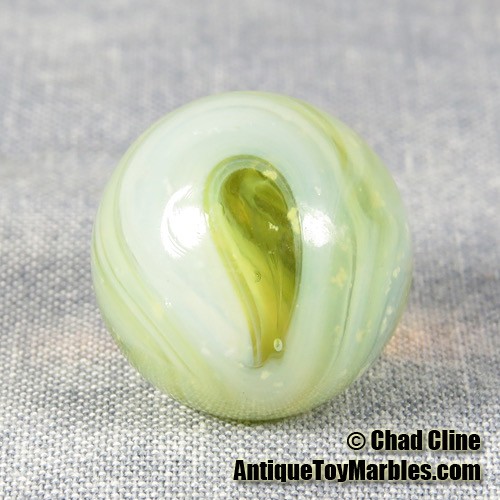
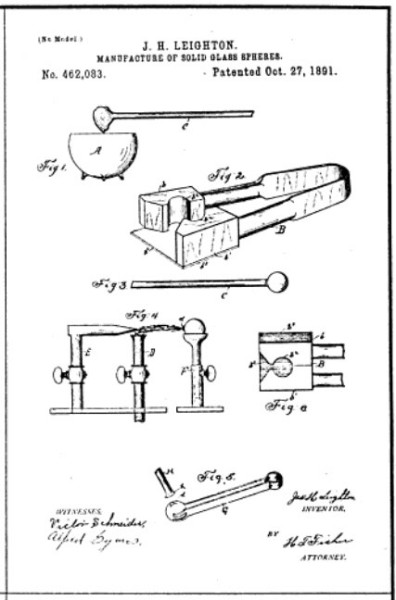
 J.H. Leighton’s 1891 patent for the manufacture of solid glass spheres marks a major step forward in early American handmade marble production.  His process began by hand gathering molten glass on the end of a steel rod, carefully building up the amount needed for a single marble. While still hot and workable, the glass was rotated within a grooved former, shaping it into a near perfect sphere while remaining attached to the rod. After the marble was formed, it was cut from the rod, leaving a small rough projection where the glass had been severed. Rather than leaving this as a simple cut mark, Leighton refined the surface through a controlled finishing process. The marble was exposed to a concentrated flame, softening the uneven area without disturbing the rest of the sphere. Once properly heated, Leighton applied a specialized concave tool similar in appearance to a small golf tee to the softened spot with light pressure. This action pushed the remaining glass back into the body of the marble, smoothing and blending it into the surrounding surface. The result is the distinctive “melted” or “pressed” pontil, a defining characteristic of Leighton’s work and an important innovation in the evolution of American handmade glass marbles.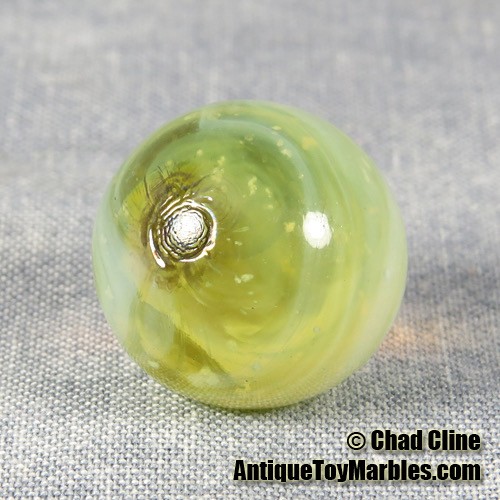
-
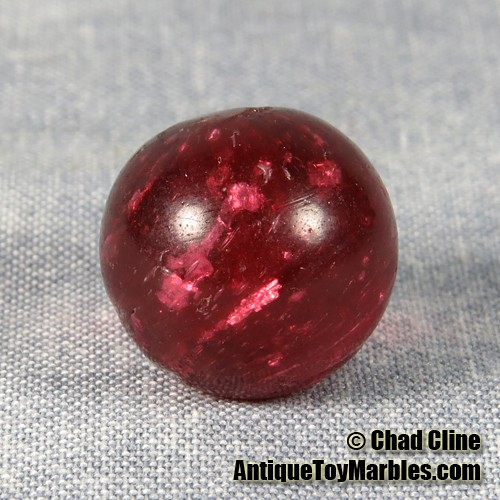
German Red Mica w/Faceted Pontil
IowaMarble replied to IowaMarble's topic in General Marble & Glass Chat
Thanks all! Appreciate you looking! -
German Red Mica w/Faceted Pontil
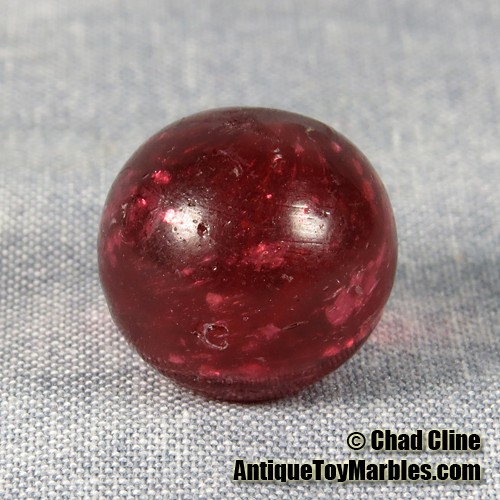
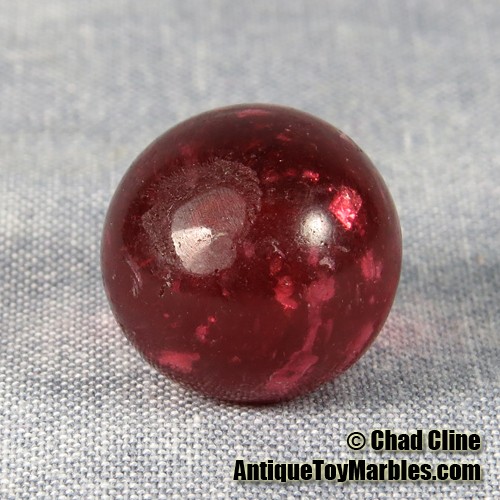
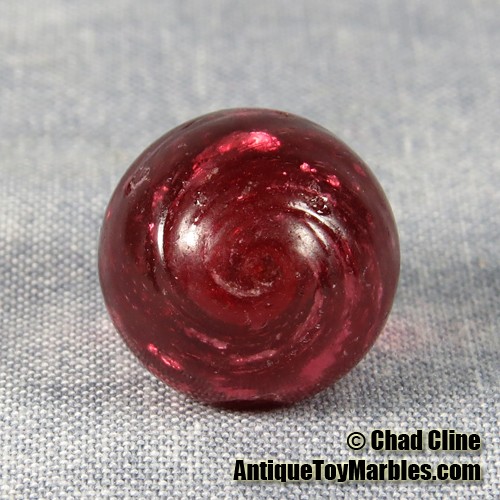
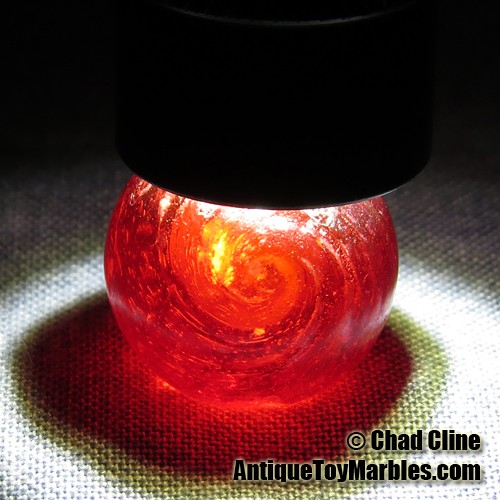
-
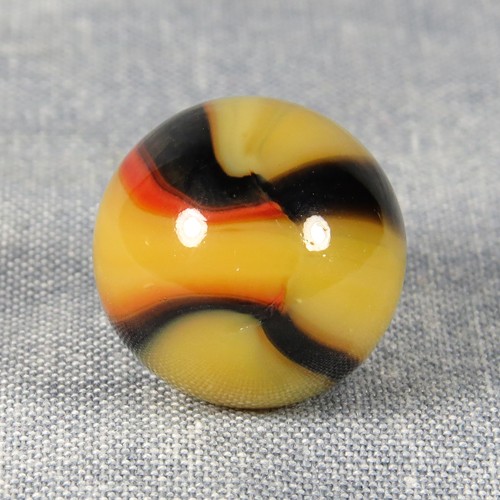
Here's kind of a neat one... Peltier "Poison Bee"
-
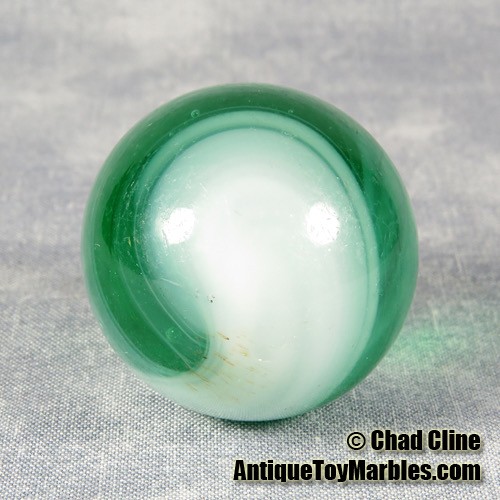
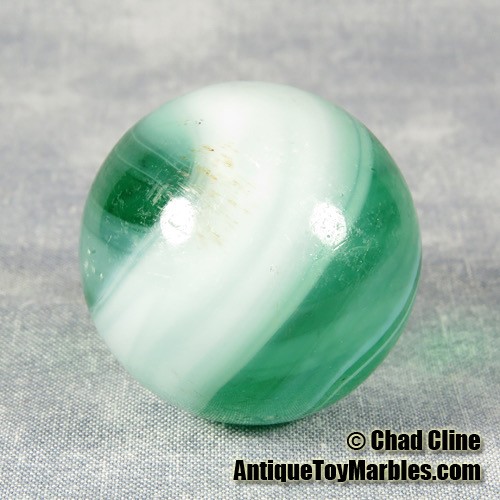
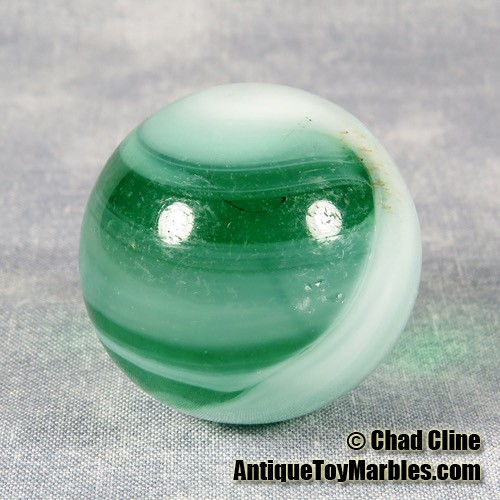
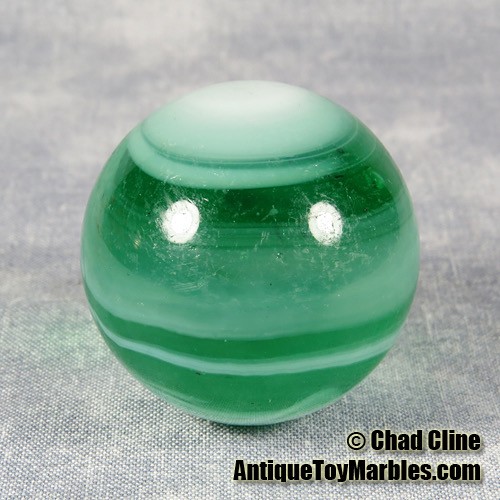
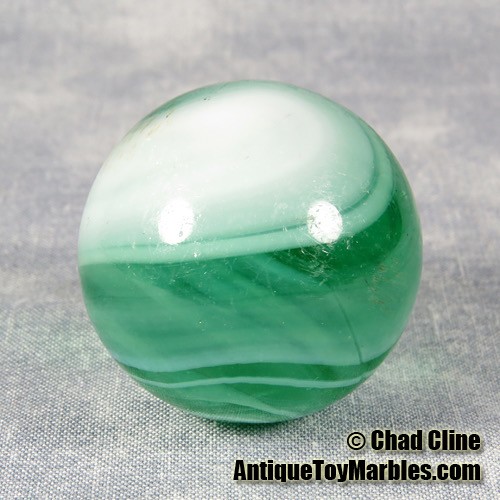
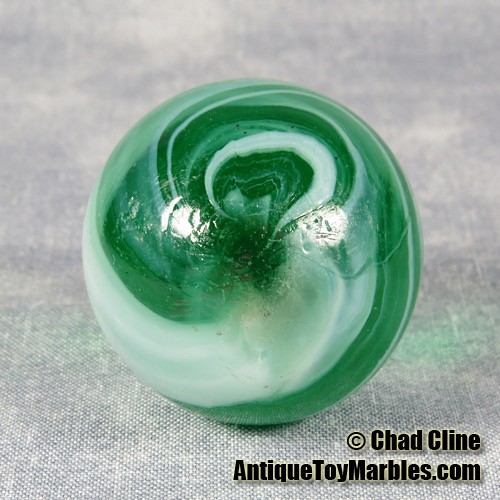
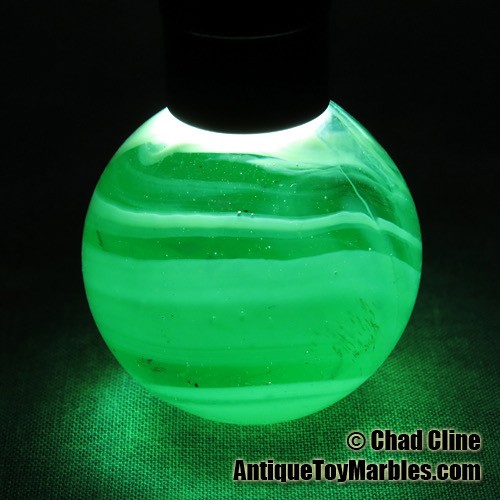
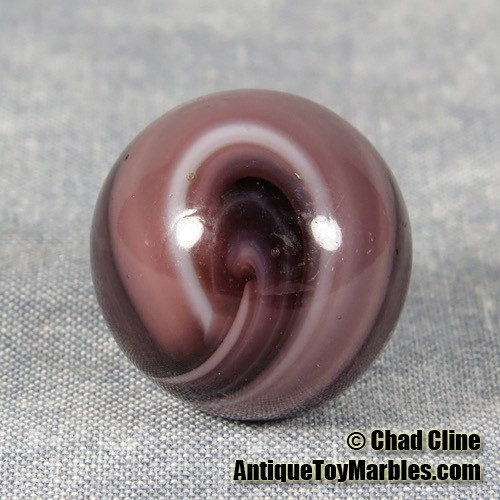
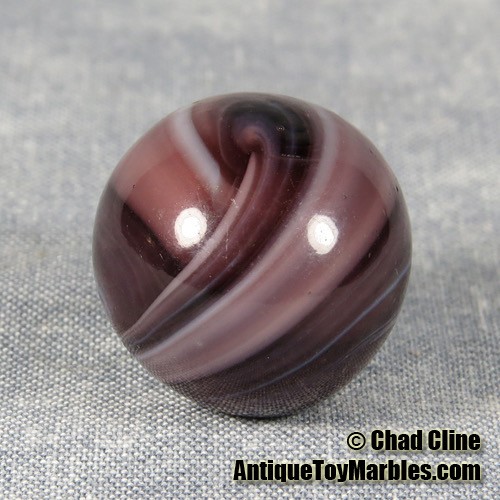
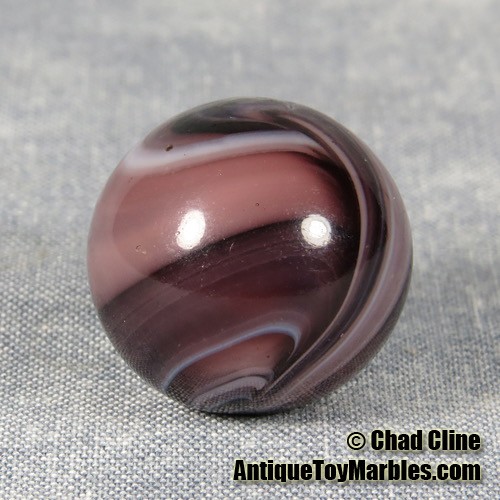
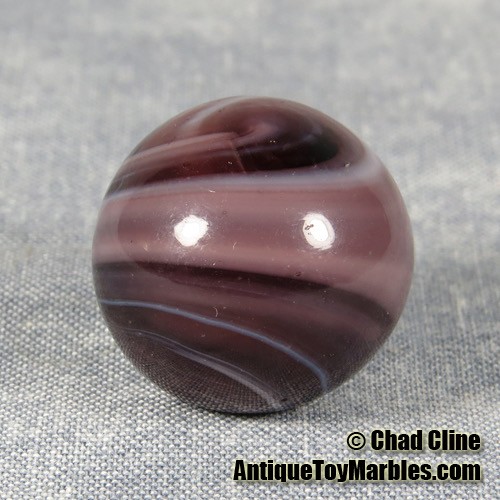
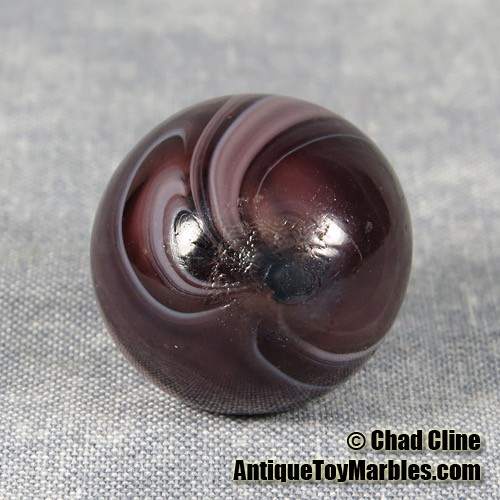
Marble mail days are the best days of the week! Sincerely grateful to add this piece to my Leighton collection. Always on the hunt for great Leighton made marbles! Measures 1 7/16”. Thank you for looking!
-
If you enjoy learning about early American handmade marbles and the people and companies behind them, please consider joining our new Facebook group Antique American Handmade Marbles. The group focuses on research and discussion surrounding makers such as S. C. Dyke, A. L. Dyke, American Marble and Toy Manufacturing Company, Standard Toy Marble Company, and other important early producers. We would love to have you join the conversation and share your interest in this fascinating part of marble history. www.facebook.com/groups/usamarbles/
-
Many collectors today naturally associate James Harvey Leighton (J. H. Leighton) with his later marble-making ventures in Ohio, where his patented finishing process helped shape early American handmade glass marble production. But did you know his influence in the glass industry began years earlier across several Midwestern communities? Before his Ohio period, Leighton helped establish and guide multiple glass factories, including Eagle Glass Works in Keota, Iowa, the Iowa City Flint Glass Manufacturing Company in Iowa City, Iowa, and later the Ottawa Bottle & Flint Glass Company in Ottawa, Illinois. These ventures reflect the path of an experienced glassman who repeatedly relocated his knowledge, equipment, and workforce to help launch new manufacturing opportunities. Understanding this broader timeline gives collectors a deeper appreciation for the lasting impact Leighton had on American glass and marble history.
-
A Couple of Leighton's - "Horizontal" and "Navarre"
IowaMarble replied to IowaMarble's topic in General Marble & Glass Chat
That is an amazing display of history right there! Thank you for sharing with us. I see some colors that I would like to add someday to my collection. -
A Couple of Leighton's - "Horizontal" and "Navarre"
IowaMarble replied to IowaMarble's topic in General Marble & Glass Chat
This is how I currently see it, though others may certainly have differing opinions. From my understanding, the ‘Navarre’ style of marble was discovered at multiple Leighton factory sites during excavations, which suggests it was likely produced at more than one location as well. -
A Couple of Leighton's - "Horizontal" and "Navarre"
IowaMarble replied to IowaMarble's topic in General Marble & Glass Chat
It is by far, one of the cleanest examples in my collection. I agree, I see more examples that have been through the trenches, than those that haven’t. -
A Couple of Leighton's - "Horizontal" and "Navarre"
IowaMarble replied to IowaMarble's topic in General Marble & Glass Chat
Yes, that is the melted pontil that I was referring to. I have heard some collectors also call it a “belly button” pontil, but I believe melted pontil is the correct terminology here, although admittedly, I am far from being a glass artisan. -
A Couple of Leighton's - "Horizontal" and "Navarre"
IowaMarble replied to IowaMarble's topic in General Marble & Glass Chat
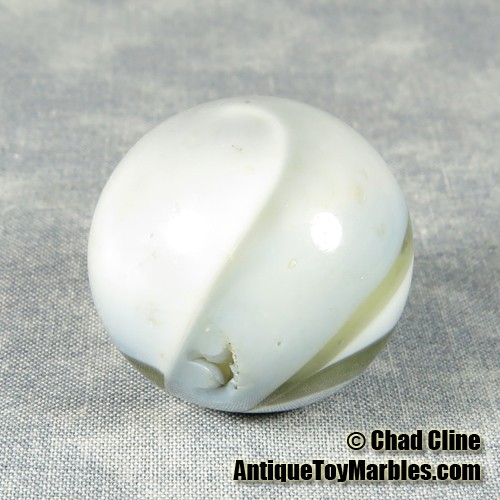
100% an American handmade marble from one of Leighton’s many Ohio based business ventures. Note the patented melted pontil. Commonly referred to as a “Navarre” by collectors, although it would be very difficult to prove that it actually came from Leighton’s Navarre factory. -
A Couple of Leighton's - "Horizontal" and "Navarre"
IowaMarble replied to IowaMarble's topic in General Marble & Glass Chat
Great pattern on that one, Tommy! What size is it? -
A Couple of Leighton's - "Horizontal" and "Navarre"
IowaMarble replied to IowaMarble's topic in General Marble & Glass Chat
Another nice Leighton “Navarre”! Thanks for sharing Roberto! There is some serious early American eye candy in this thread! -
A Couple of Leighton's - "Horizontal" and "Navarre"
IowaMarble replied to IowaMarble's topic in General Marble & Glass Chat
That is uncanny how closely they resemble one another! How would you describe the base glass color on these? I can’t quite put my finger on it. Thanks for sharing! -
A Couple of Leighton's - "Horizontal" and "Navarre"
IowaMarble replied to IowaMarble's topic in General Marble & Glass Chat
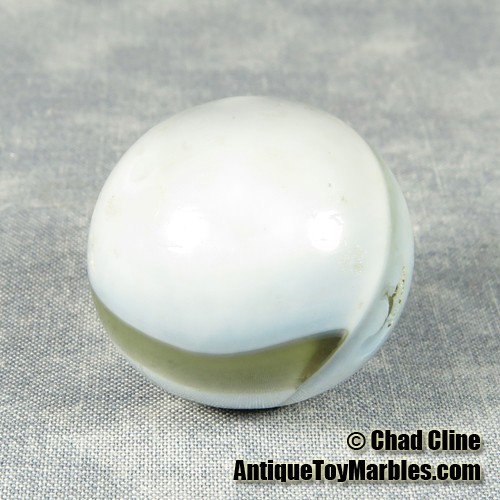
1.25"+ Leighton "Navarre"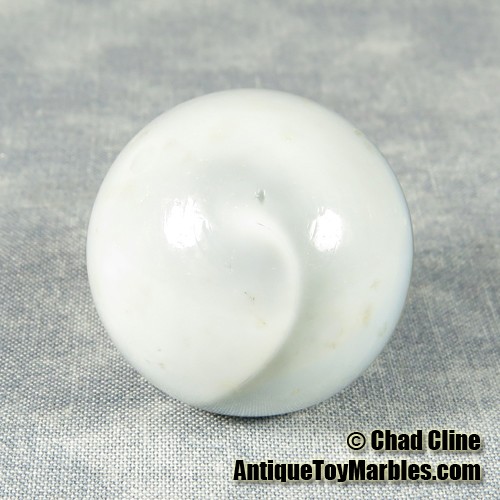
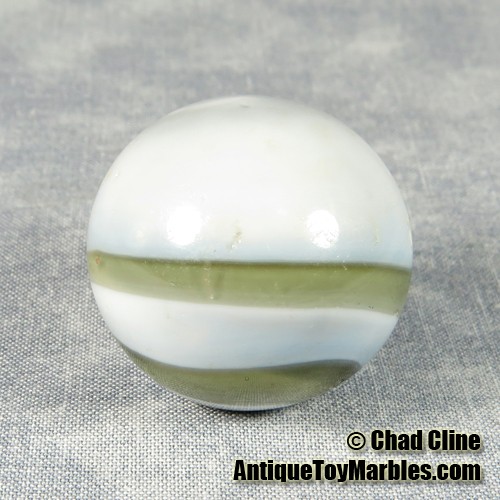
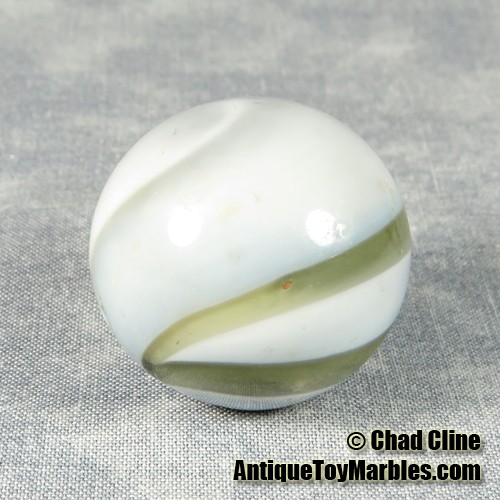
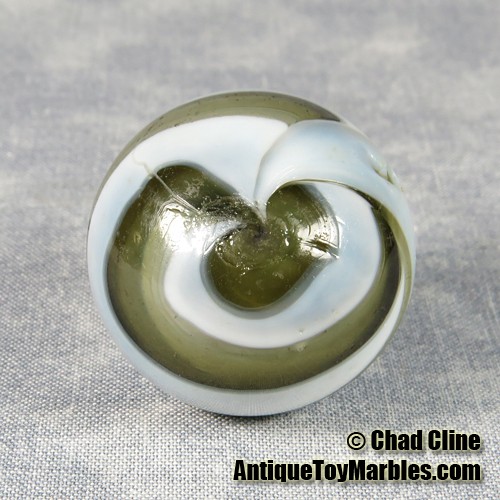
-
New marbles! 2 large agateware!
IowaMarble replied to Opae ula's topic in General Marble & Glass Chat
Truly museum quality specimens! Thank you for sharing. -
Peltier had a formula for pearlized glass. Pearlized patches were produced intentionally, but weren't produced in great numbers due to their tendency to fracture.
-
For the record, Bill is still very much alive.
-
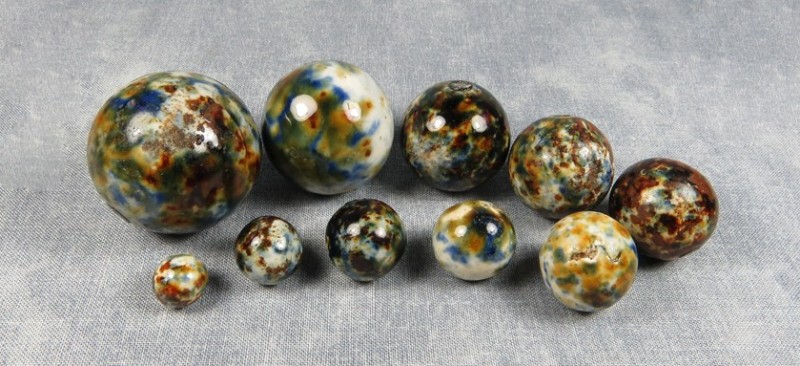
Always appreciate a good benny when I can find them...
-
2024 LAS VEGAS MARBLE SHOW
IowaMarble replied to westcoast_dave's topic in General Marble & Glass Chat
@westcoast_dave Is there a special discounted room rate for this show? -
My vote would be Champion as Ric indicates above.
-
2024 Des Moines Marble Show - official thread
IowaMarble replied to IowaMarble's topic in General Marble & Glass Chat

-
2024 Des Moines Marble Show - official thread
IowaMarble replied to IowaMarble's topic in General Marble & Glass Chat