Jump to content

Chad G.

Moderator
  • Posts

    15175
  • Joined

  • Last visited

  • Days Won

    237

Everything posted by Chad G.

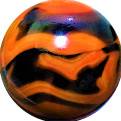
  1. Grey base NLR, not sure what to call it, rusty orange ribbons ?? Grey base is HTF anyway.
  2. Another one. A pink based Pelt NLR, one of my first Pelts. I had no idea how rare it was until I had it auctioned off and it was gone. The pix give no justice to how pink it actually was.
  3. Whatever it is it's whacked
  4. Some of the marbles I deeply regret selling. I know you have some to, post em if you can bear it !! I like one offers, what would you say this is ?? The base glass is amethyst W yellow running all through the matrix
  5. One of the few colors of Banded Lutz I still don't have (And pink of course)
  6. Chad G.

    I.D help p3

    Foreign, sorry man, I wish I could help more
  7. Imperial would be my first guess, then foreign
  8. Not MFC or CAC, something else
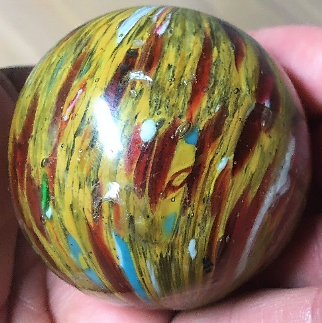
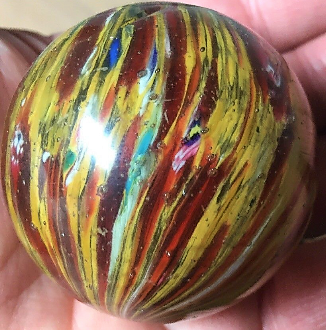
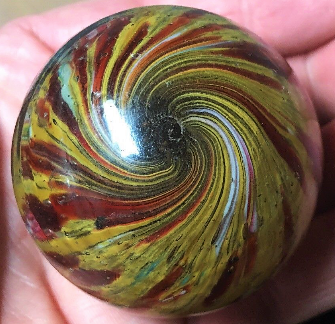
  9. Oxblood in glass is a deep, rich red color created by a copper compound that is fired under a lack of oxygen (reduction) during the firing process. This method produces a dark, often opaque red that can range from a deep maroon to a rich reddish-brown, and the exact color and quality depend on the precise control of the kiln temperature and atmosphere. Reduction firing: The glass containing copper is fired in a kiln with a limited supply of oxygen. Oxygen-starved environment: This "reduction" atmosphere prevents the oxygen from fully oxidizing the copper, which is necessary to achieve the desired red color. Temperature control: The key to making good oxblood is the precise temperature at which the reduction begins. If the reduction starts too early, the glaze can turn a dull red. If it starts too late, the red color may not appear at all, resulting in a clear glaze. Characteristics of oxblood glass Color: It's a deep, dark red with hints of brown, resembling maroon or burgundy. Opacity: Oxblood glass is often opaque, though it can appear translucent in areas where it is spread very thinly. Appearance: The color can be dense and may be concentrated near the surface or run through the core of the glass object, depending on the manufacturing process. Applications: It is used in various glass objects, such as marbles, pottery glazes, and architectural glass, with its value often tied to the skill used to create it. Oxblood can also dive into the matrix of the marble, not restricted to the surface. Surface oxblood examples :
  10. Filled with water and used for rolling out dough, usually warm water.
  11. Overlapping, no blending
  12. X2, no ox, Most Pelts containing ox are MCS (Multi color swirls) but there is always an exception to every rule.
  13. X2, maybe, kinda looks Vitro ??
  14. Two blue based and the red based is Pelt (Banana construction, in Kempskis book, I didn't know what it was) I think the two bigger ones are foreign ?? Not sure though, no idea what Fire's OP is
×
×
  • Create New...